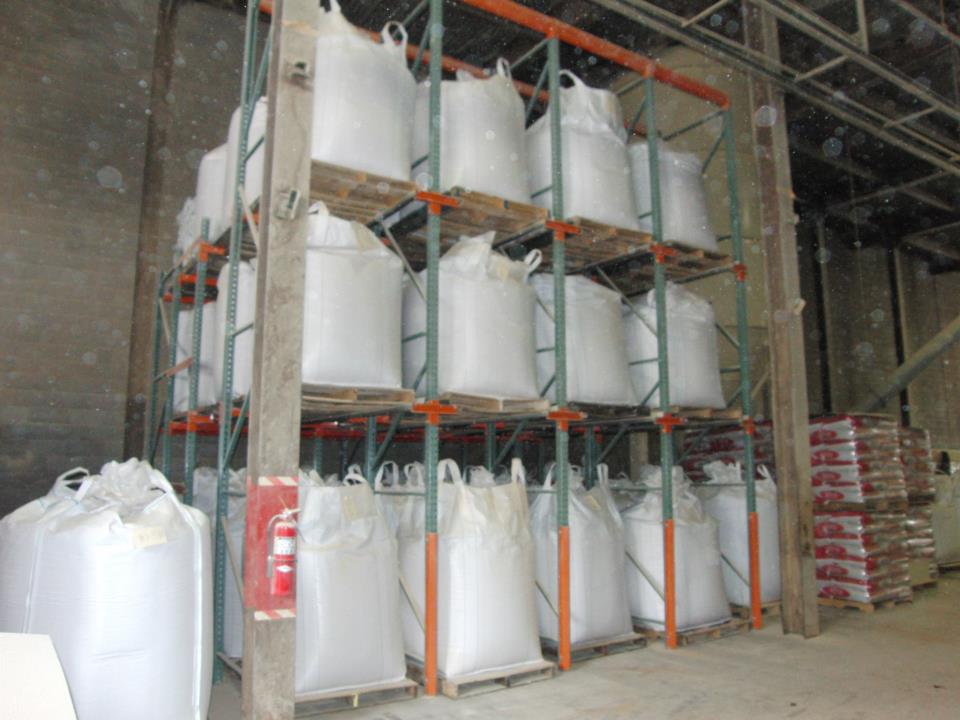
Drive-In Rack in Wauwatosa, WI
Drive-in rack in Wauwatosa, WI requires medical supply reserve planning that respects product identity as well as pallet quantity. Deep lanes can serve repeated loads of the same item, but they restrict independent access to pallets behind the first position. Lot status, expiry sequence and release requirements should therefore be considered before density becomes the main objective.
Around Research Park and the Burleigh Street corridor, medical supply and light manufacturing operations may need bulk reserve beside more accessible inventory. Connections to US-45 do not change the underlying choice: drive-in pallet rack fits few SKUs with many matching pallets. Products awaiting different release decisions or supplying frequent small withdrawals may need separate, directly accessible locations instead.
Review Drive-In Rack Around Inventory Status
We ask how a pallet becomes available for use, how its identity is recorded and what happens if one lot must remain untouched. Those questions influence lane assignments and the amount of selective storage retained. A dense arrangement should not require moving released inventory simply to reach a pallet whose status differs from its neighbors.
This division is part of Warehouse Equipment & Supplies Co., which has been supplying and installing warehouse storage since 1997. We connect the new rack specification with your handling and identification practices, checking physical clearances and documented storage assumptions rather than treating barcode labels as a substitute for accessible inventory.
Wauwatosa operating requirements
Assign lane identities that correspond with the inventory system and make stock status visible before entry. Around the Research Park area, medical supply reserve may need separation by product, lot or release condition rather than by SKU alone. Establish an exception process for held pallets and incomplete lanes. Light manufacturing reserve should follow equally clear rules for component revision and batch identification.
Plan Drive-In Pallet Rack Access Controls
Compare the lane arrangement with Wauwatosa inventory and handling requirements before ordering material.
Define access restrictions
List products, lots, expiry requirements and release conditions. Determine which pallets can share a withdrawal sequence and which need independent access even when their packaging and item numbers match.
Measure pallets and trucks
Record maximum loaded dimensions, weights and underside construction. Include the actual truck chassis, mast and attachments so support geometry and moving clearances can be reviewed as one arrangement.
Test rotation scenarios
Walk through receiving, release, withdrawal and an inventory hold. Compare single-entry lanes, opposing access and accessible reserve positions using those scenarios before selecting the final storage mix.
Install and identify positions
New materials are installed in the agreed configuration and anchored to the floor. Coordinate lane identification and capacity information with your operating procedures before placing inventory into the system.
Use Drive-Thru Racking With Deliberate Rotation
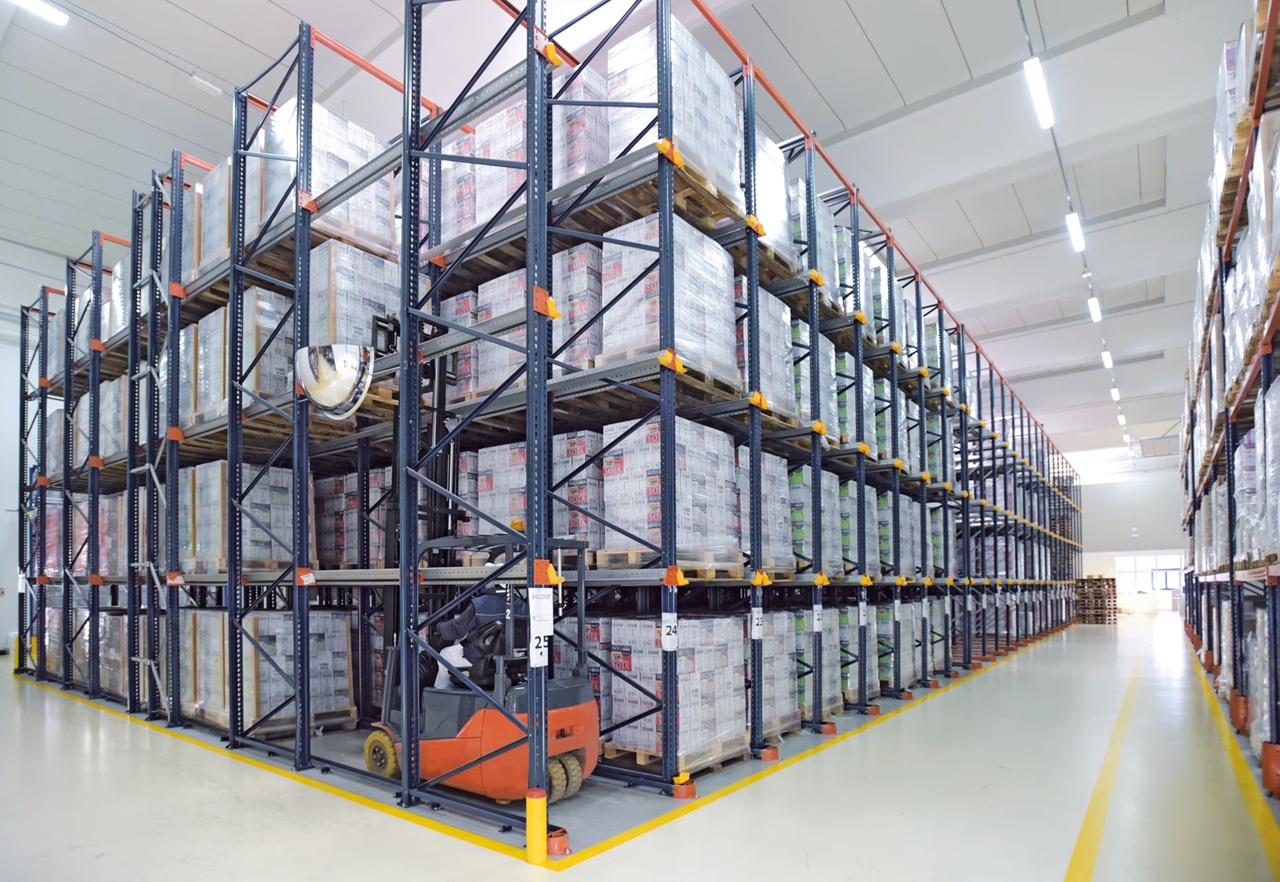
In drive-in rack, the forklift travels into a lane between structural supports and places pallets on stationary support rails. Its wheels stay on the floor; the rails carry pallets, not the vehicle. Rail bearing dimensions and support capacities must suit the actual pallet underside, maximum load and any packaging restrictions that affect how the pallet can rest.
We size floor guides to the intended truck chassis and wheel arrangement, then verify mast, carriage and load clearances through the placement movement. Wrapped medical supplies may extend beyond their pallet footprint, while light manufacturing loads can vary in height. Both need measured envelopes rather than nominal dimensions copied from a product list.
Single-entry lanes typically operate LIFO and may conflict with dated inventory needs. Opposing-face drive-thru racking can support FIFO when operators maintain distinct replenishment and withdrawal ends; earliest-expiry selection still needs its own controls. Cooler and freezer applications require suitable equipment and materials. Pushback keeps trucks outside the rack, although its usual LIFO sequence also needs evaluation.
Compare the storage choices for your operation: Wauwatosa equipment services; Bulk system details for Wauwatosa; Wauwatosa pushback comparison; Wauwatosa pallet flow planning.


Review Your Wauwatosa Storage Plan
Send your Wauwatosa layout, pallet specifications and inventory access requirements. We will review bulk-storage suitability, rotation constraints and the scope for supplying and installing a new system. Call (414) 260-3593.
Milwaukee Pallet Rack
7311 W Greenfield Ave.
Ste 316
Milwaukee, WI 53214
(414) 260-3593Monday - Friday: 8:00 AM - 6:00 PM
Wauwatosa bulk storage decisions
Other Rack Types We Supply in Wauwatosa
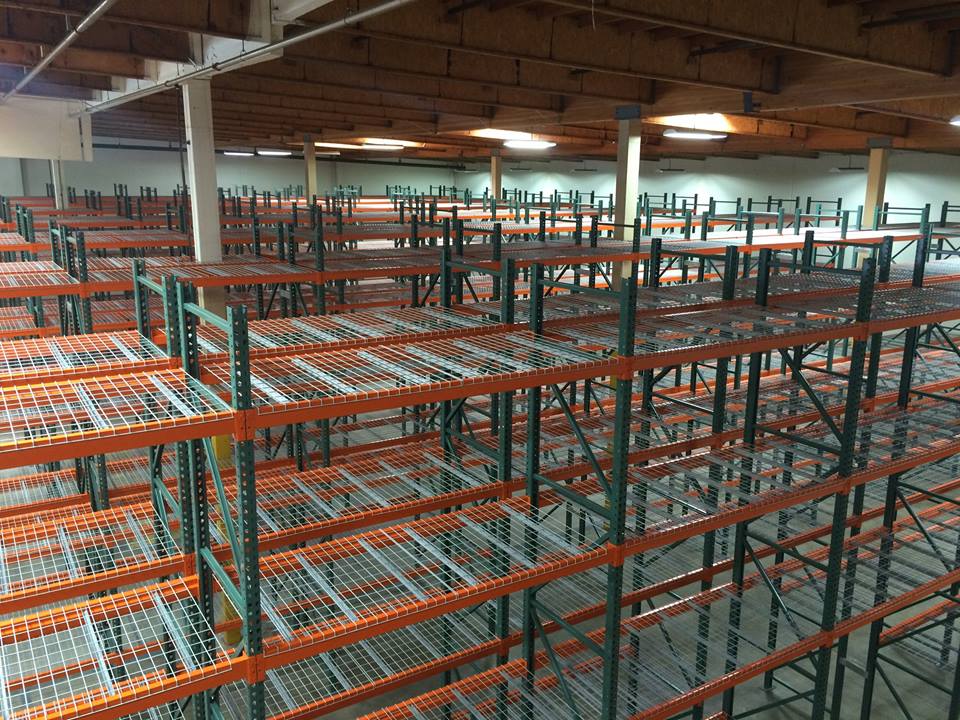
Pallet Rack
Every pallet reachable, every time. The baseline we size everything else against.
View details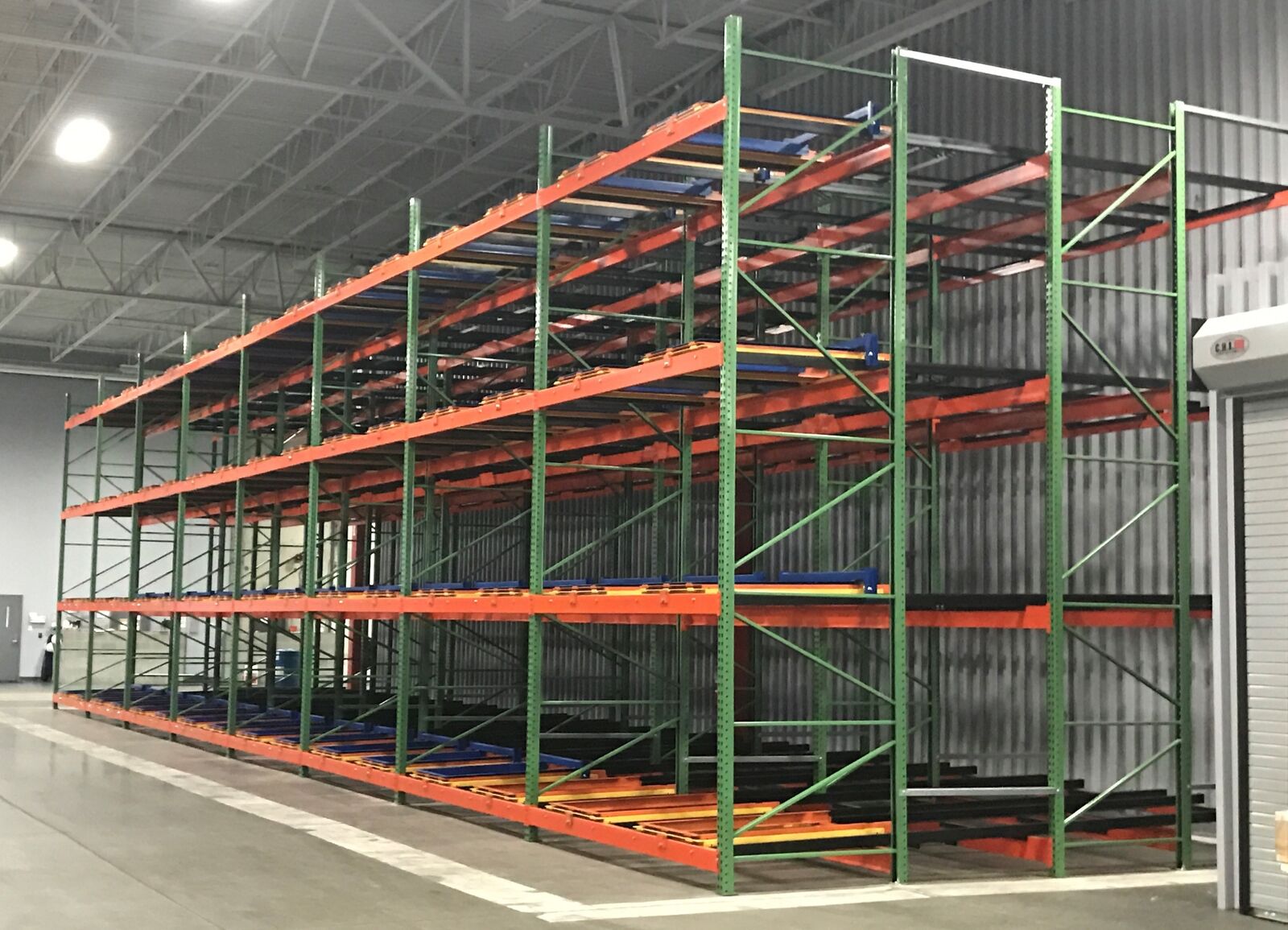
Pushback Rack
Two to six pallets deep from one aisle, without giving up much reach.
View details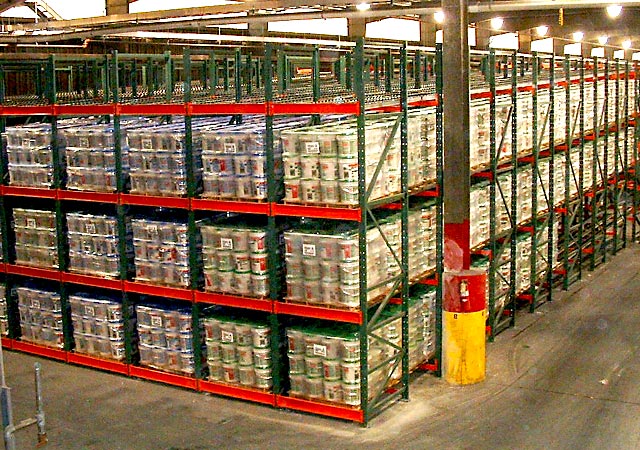
Pallet Flow Rack
Load one side, pick the other, and let gravity enforce first in, first out.
View details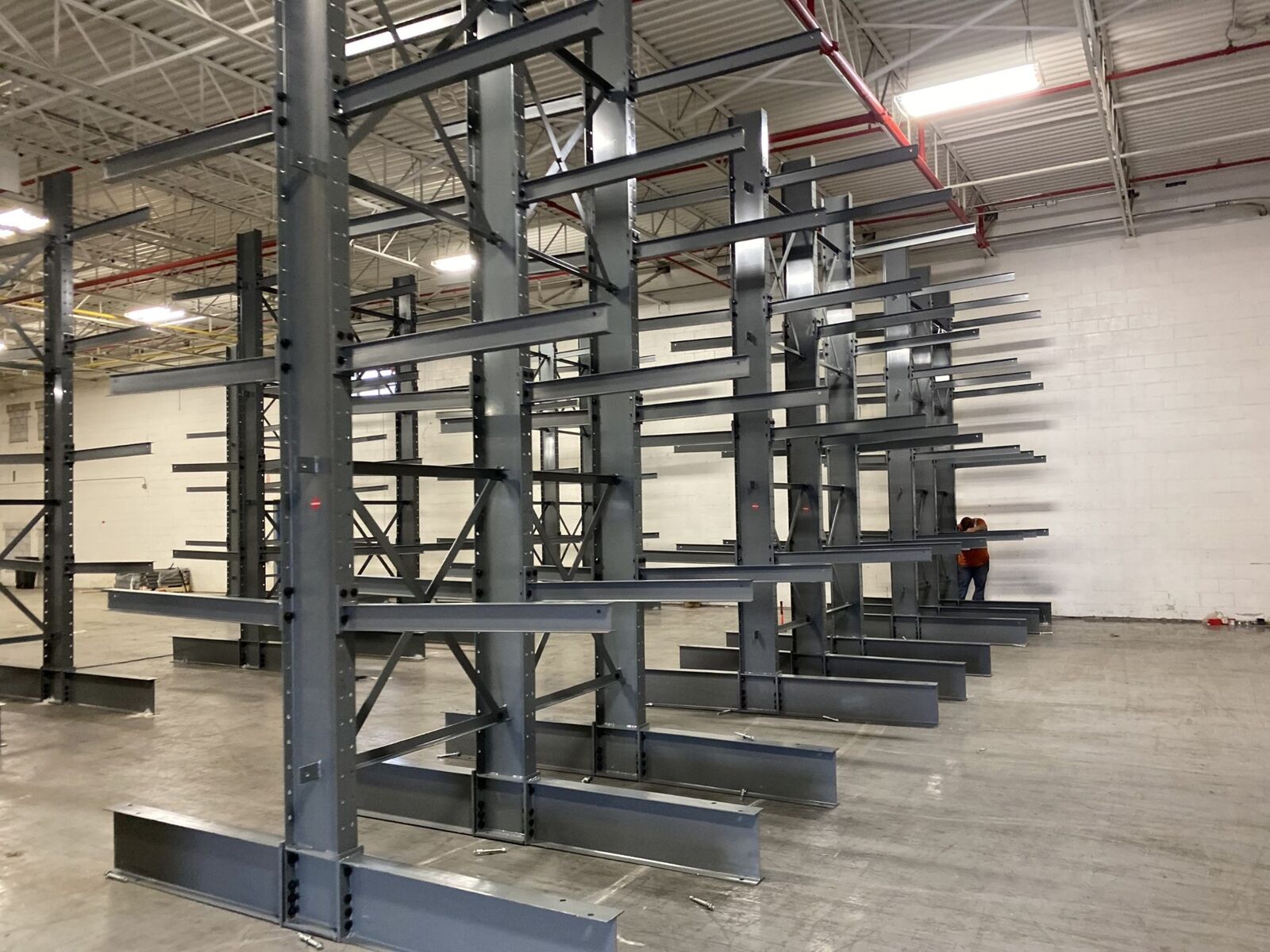
Cantilever Rack
Arms with nothing in front of them, built for lumber, pipe, and anything a pallet can't hold.
View details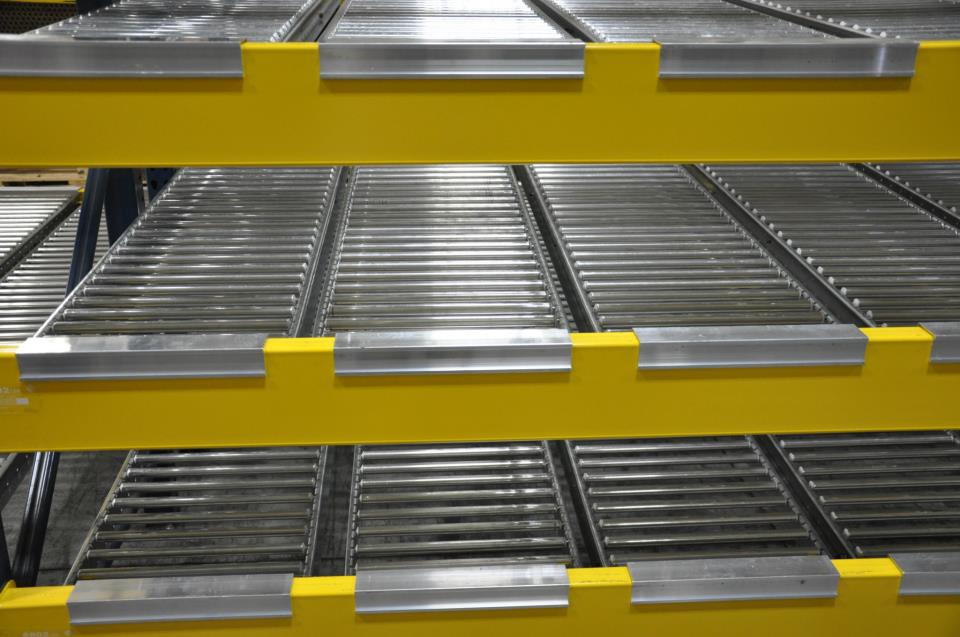
Carton Flow Rack
Cases advance to the picker instead of the picker hunting for cases.
View detailsNearby Areas We Also Serve
Our delivery and installation territory covers southeastern Wisconsin, with scope and scheduling agreed for each building.
Where We Work
Located in Milwaukee, we serve the entire Milwaukee metro with industrial pallet racks and warehouse storage solutions.
Milwaukee Pallet Rack
Address
7311 W Greenfield Ave.
Ste 316
Milwaukee, WI 53214
Phone
(414) 260-3593Business Hours
Monday - Friday: 8:00 AM - 6:00 PM
Saturday: Closed
Sunday: Closed
Need Drive-In Rack in Wauwatosa?
Call (414) 260-3593 or request a quote and we will get a layout started.